

Quick Answer: Basement waterproofing cost in Boise depends almost entirely on which method your home actually needs, and that's determined by where your water is coming from, not by square footage alone. A crack injection and a full exterior excavation solve completely different problems and involve completely different scopes of work. The right fix varies so much from house to house, especially with the Treasure Valley's seasonal, irrigation-driven water table in the mix. Because of that, the only reliable way to get an accurate number is a free on-site assessment with one of our estimators.
That range is wide for two reasons. "Basement waterproofing" covers several different repairs with very different scopes, and Boise adds a few cost factors most national guides never mention.
What Actually Drives Basement Waterproofing Cost
Waterproofing contractors price by method, not by the word "waterproofing" itself. Four approaches cover most Boise jobs.
Crack injection seals an isolated crack in a foundation wall with epoxy or urethane. It's the most limited fix of the four: it stops water at that specific crack but does nothing about the hydrostatic pressure causing it.
Waterproof coating or sealant goes on the interior wall surface as a vapor barrier. It's a cosmetic and preventive measure more than a structural fix, and it won't stand up to real hydrostatic pressure on its own.
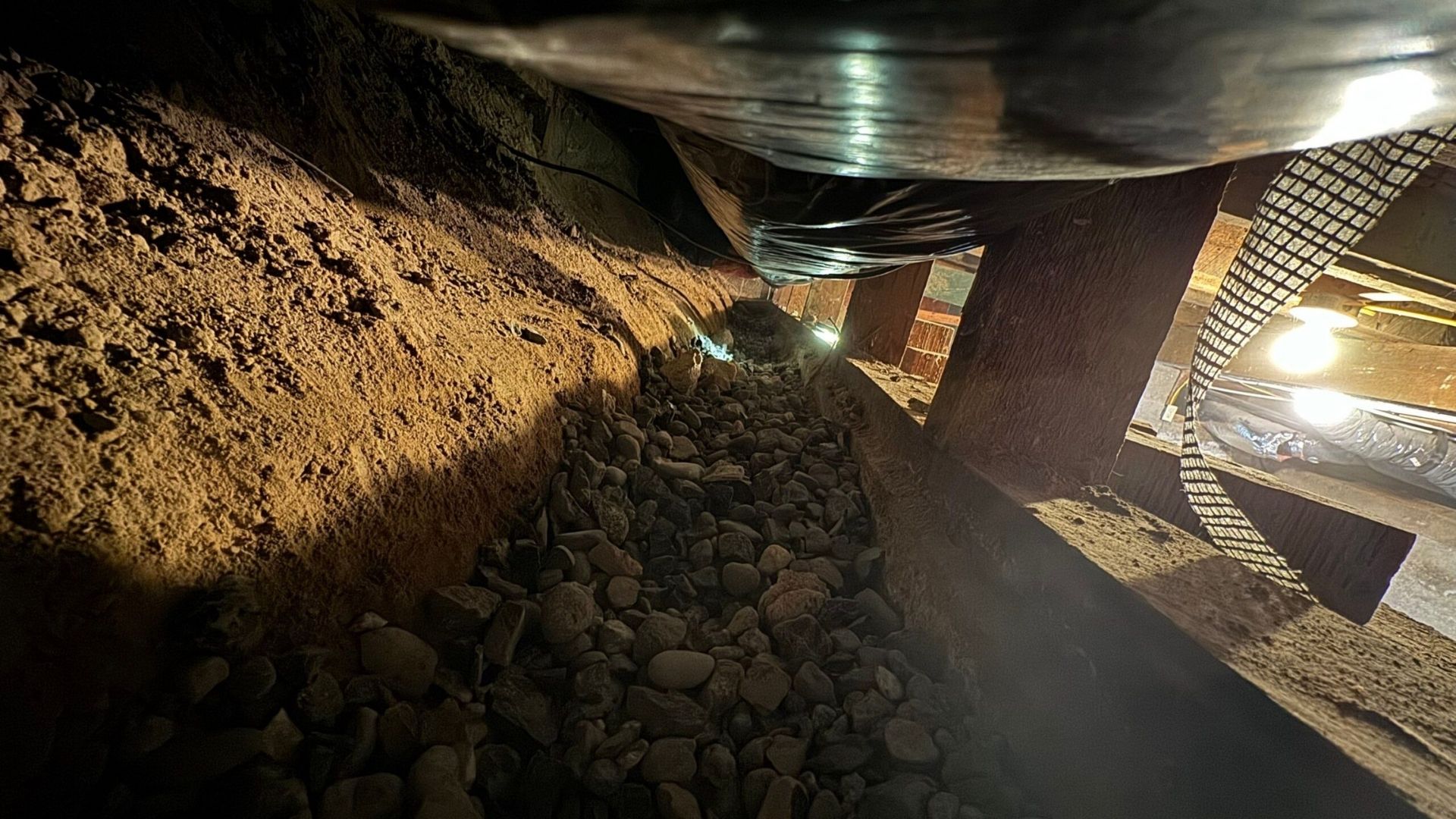
Interior drain tile with a sump pump is the most common full fix. A contractor cuts a channel along the basement floor perimeter, lays perforated pipe in gravel, and routes collected water to a sump pump that pushes it outside. This manages water that's already gotten in; it doesn't stop it from reaching the wall in the first place.
Exterior excavation and membrane is the most complete and most involved option. Crews dig down to the footing on the outside of the house, apply a waterproof membrane directly to the wall, and often add exterior drain tile before backfilling. This intercepts water before it ever touches your foundation wall.
How the Four Methods Compare on Scope
| Method | Relative Scope | What It Solves |
|---|---|---|
| Crack injection | Smallest — a single-point repair | Seals a single crack; doesn't address the pressure causing it |
| Waterproof coating / sealant | Small — a surface treatment | Vapor barrier only, not a drainage fix |
| Interior drain tile + sump pump | Moderate — a full perimeter system | Manages water after it enters |
| Exterior excavation + membrane | Largest — full perimeter excavation | Intercepts water before it reaches the wall |
Where your project lands on this scale depends more on your specific water source and soil conditions than on which contractor you call. That's why we don't publish blanket pricing here. A free on-site estimate is the only way to get a number tied to your actual home.
Why Boise and the Treasure Valley Add Their Own Factors
Irrigation canals change the water table on a schedule. The Treasure Valley runs on an irrigation network built more than a century ago. The New York Canal and the Ridenbaugh Canal feed several hundred smaller canals and laterals across Ada and Canyon counties. When those canals run, roughly April through October, groundwater near canal-adjacent properties can rise several feet above where it sits in winter. A crawl space or basement that's bone dry in January can see real hydrostatic pressure in July. A waterproofing plan that ignores the irrigation calendar is planning for the wrong season.
Clay soil and freeze-thaw stress work year-round. Idaho's clay-heavy soil expands when wet and contracts when dry. That cycle repeats with every irrigation season and every winter freeze. Add spring snowmelt runoff on top of rising canal-driven groundwater, and many Treasure Valley basements face two separate pressure sources within a few months of each other.
Permitting is handled locally, not by the state. Idaho's permitting process is decentralized. Boise and Meridian each run their own building department. The Idaho Division of Building Safety covers areas without local plumbing or trade permitting. Exterior excavation near your foundation typically needs a permit, and so does a new sump pump discharge line. That permit comes from whichever jurisdiction your home sits in. Build that step into your timeline, not just your budget.
Interior vs. Exterior: Matching the Fix to the Actual Problem
Interior systems make sense for minor seepage or a tighter scope of work. They also fit homes where exterior excavation isn't realistic, like a basement built close to a property line or under a finished patio. The tradeoff: the wall itself stays exposed to pressure from outside. You're managing symptoms, not the source.
Exterior systems take more work and more time, but they solve the problem at the wall instead of after the water's already inside. That difference matters more for a home near one of the Treasure Valley's canals or laterals. The water table there rises predictably every irrigation season, unlike a home dealing with only occasional rain-driven seepage.
We install interior drain tile and sump pump systems. We also do full Basecrete exterior waterproofing, plus French drains for surface water that never should have reached the foundation in the first place.
What's Warrantied
Waterproofing is one line in a broader warranty structure that covers every repair type across the Foundations First network, not just this one:
| Repair | Warranty |
|---|---|
| Helical Piles | Lifetime |
| Grouted Micropiles | Lifetime |
| Invisibeam | Lifetime |
| Waterproofing | Limited Lifetime* |
| Steel Adjustable Posts | 20 Years |
| Carbon Fiber Reinforcement | 20 Years |
| Steel Wall Braces | 20 Years |
| Deadman Wall Braces | 20 Years |
| Stem Wall Repairs | 20 Years |
| Shotcrete | 20 Years |
| Slab Repairs | 2 Years |
| Workmanship Warranty | Included on qualifying repairs |
*Sump pumps carry the manufacturer's 3-year warranty rather than our own term. All warranties are transferable to a future homeowner, and they apply as long as the associated invoice is paid in full. We'll walk through exactly what applies to your project during your free estimate.
Schedule a Free Inspection to Get Your Price
Every comparison above assumes an average basement and a single, identifiable water source. Real Boise basements often have more than one: wall seepage plus a rising water table plus a downspout dumping water four feet from the foundation. A phone estimate can't sort that out, and neither can a published price range.
We provide free on-site estimates across Boise, Meridian, Nampa, Caldwell, and Eagle, and offer financing for homeowners who want to move forward without paying the full cost upfront. One of our experts will assess your specific home, help you determine which method actually fits your situation, and give you a real price to go with it. If your basement is damp, musty, or actively wet during irrigation season, scheduling that free inspection is the fastest way to find out. You'll learn what your home actually needs, and what it costs to fix it right.
Frequently Asked Questions
Does homeowners insurance cover basement waterproofing? Generally no. Insurance typically excludes waterproofing as preventive maintenance. It covers only sudden events, like a burst pipe or a failed sump pump, not gradual seepage or a rising seasonal water table.
How long does basement waterproofing take in Boise? An interior drain tile and sump pump installation usually takes 2 to 4 days. A full exterior excavation and membrane system typically takes 1 to 2 weeks, depending on basement size, access, and weather.
Do I need a permit to waterproof my basement in Boise or Meridian? Often, yes. Exterior excavation near your foundation and new sump pump discharge lines commonly require a permit. That permit comes from your city's building department, or from the Idaho Division of Building Safety if your area doesn't handle plumbing permits locally.
What's the difference between a French drain and Basecrete waterproofing? A French drain manages water through drainage, redirecting it away from or out from under your home. Basecrete is a flexible waterproofing coating applied to the foundation itself, sealing out moisture rather than just draining it away. Many Boise homes benefit from both working together.
Does living near an irrigation canal affect my waterproofing needs? Yes. Groundwater near canal-adjacent properties can rise several feet during the irrigation season, roughly April through October, creating hydrostatic pressure that isn't present in winter. Homes near a canal or lateral often need a plan built around that seasonal swing, not just average rainfall.
Is basement waterproofing work under warranty? Yes. Waterproofing carries a limited lifetime warranty, with sump pumps covered separately by the manufacturer's 3-year warranty. The warranty is transferable to a future homeowner as long as the invoice is paid in full.
How much does basement waterproofing cost in Boise? It depends entirely on which method your home needs, which comes down to where the water is coming from. A single crack injection is a small, contained repair; a full exterior excavation is a much larger undertaking. Because that determination requires seeing the actual property, we provide a free on-site estimate rather than publishing blanket pricing.
Key Takeaways
- Basement waterproofing cost in Boise depends on which of four methods your home needs: crack injection, waterproof coating, interior drain tile with a sump pump, or exterior excavation with a membrane.
- Crack injection is the smallest, most contained fix; exterior excavation and membrane is the largest and most involved.
- The Treasure Valley's irrigation canal system, including the New York Canal and Ridenbaugh Canal, raises groundwater near canal-adjacent properties several feet during irrigation season, roughly April through October.
- Idaho's clay-heavy soil expands when wet and contracts when dry, adding pressure on top of whatever the irrigation season and spring snowmelt are already doing.
- Exterior excavation and new sump pump discharge lines typically require a permit from Boise's or Meridian's building department, or the Idaho Division of Building Safety.
- Interior systems manage water after it enters; exterior systems intercept it before it reaches the wall, which matters more for homes near a canal or lateral.
- Homeowners insurance generally does not cover basement waterproofing as preventive maintenance, only sudden events like a burst pipe or failed sump pump.
- Waterproofing carries a limited lifetime warranty (sump pumps carry the manufacturer's 3-year warranty), transferable to a future homeowner if the invoice is paid in full.
- Because the right method and price depend entirely on your specific water source and soil conditions, a free on-site inspection is the only way to get an accurate number.